
Start with the Lowest Cost for an Approved HDI Construction
HDI PCB cost is best reduced by removing manufacturing complexity that the circuit does not need, then comparing quotes for the same approved construction. Review the build-up sequence, microvia arrangement, via treatment, panel layout and order quantities before accepting a unit price. Keep the electrical, assembly and reliability requirements intact.

XinshunPCB offers custom HDI PCB manufacturing with project-specific engineering review. The commercial opportunity is to connect the drawing directly to a practical fabrication route: identify cost-sensitive features early, resolve avoidable process steps and quote a clearly defined build. A cheaper manufacturing route becomes useful only after engineering approves it.
There is no meaningful universal price for an HDI board. Two boards with the same dimensions and layer count may require different fabrication sequences, hole treatments, materials and inspection deliverables. An attractive starting price from another design is therefore not a reliable budget for yours.
This guide focuses on how to obtain a more competitive HDI quotation. It does not offer a published price list or a guaranteed saving percentage. Ask for an approved baseline and separately identified alternatives so your team can see exactly where a price difference comes from.
Which HDI Features Increase the Quotation?
The PCB manufacturing cost guide covers general board-price drivers. HDI purchasing adds a particularly important question: how many manufacturing stages and special treatments are required to produce the specified layer connections? Review that sequence, rather than judging complexity from the final layer count alone.
| Cost lever | What to review | What must remain protected |
|---|---|---|
| Build-up architecture | Whether the routing can use a simpler approved build-up | Layer connectivity, impedance and reference planes |
| Via arrangement | Stacked versus staggered routes and required filling | Routing space and qualification evidence |
| Via-in-pad treatment | Which via families need filling, capping and planarization | Solderable pad condition and assembly requirements |
| Materials and geometry | Available approved laminate systems and practical feature sizes | Thermal, electrical and mechanical requirements |
| Panel and quantities | Manufacturing utilization, release size and delivery batches | Assembly handling, demand and revision control |
A design containing several different via families needs a clear layer-span schedule. Otherwise, the supplier may quote a conservative interpretation or return questions that delay the order. Define which layers each family connects and distinguish mechanical holes from laser microvias.
Give the purchasing team the same released drawing used by engineering. Informal notes in an email cannot reliably compensate for conflicting stackup, drill and fabrication files. An inexpensive quote based on an incomplete package may become a more expensive order after those conflicts are resolved.
Reduce Build-Up Complexity Before the Layout Is Frozen
The strongest opportunity to change construction cost usually comes before routing decisions are locked. Ask the designer and fabricator to review whether the chosen component escape routing actually needs every build-up level. Do not specify an advanced architecture simply because it appeared in a previous project.
Compare options using the HDI PCB design guidelines. A less complex build-up can be a candidate for lower fabrication cost if it still accommodates the actual routing, power distribution, signal references and mechanical constraints. Removing layers without redesigning those functions is not a cost-saving approval.
The tradeoff is broader than fabrication. A simpler build-up could require a larger board outline or different component placement. Those changes may affect the enclosure, connectors and assembly. Compare the cost of the complete acceptable design, including any redesign or qualification work, rather than selecting the lowest board-only number.
As a general manufacturing reference, Eurocircuits’ Buildup Editor guide explains that blind and buried via runs can add manufacturing operations and pressing cycles. Its specific process rules belong to that supplier; they are not universal XinshunPCB design limits.
Request a written comparison between the baseline and the alternative. Each option should identify the stackup revision, via schedule, assumed materials and unresolved engineering questions. That makes the quoted difference reviewable instead of turning a low price into an undocumented design change.
Pay for the Via Treatment the Board Actually Needs
Filling, copper capping and planarization are manufacturing decisions with a purpose. They should follow the pad and interconnect requirements. Blanket instructions can add unnecessary work, while missing instructions can produce a surface that is unsuitable for assembly.
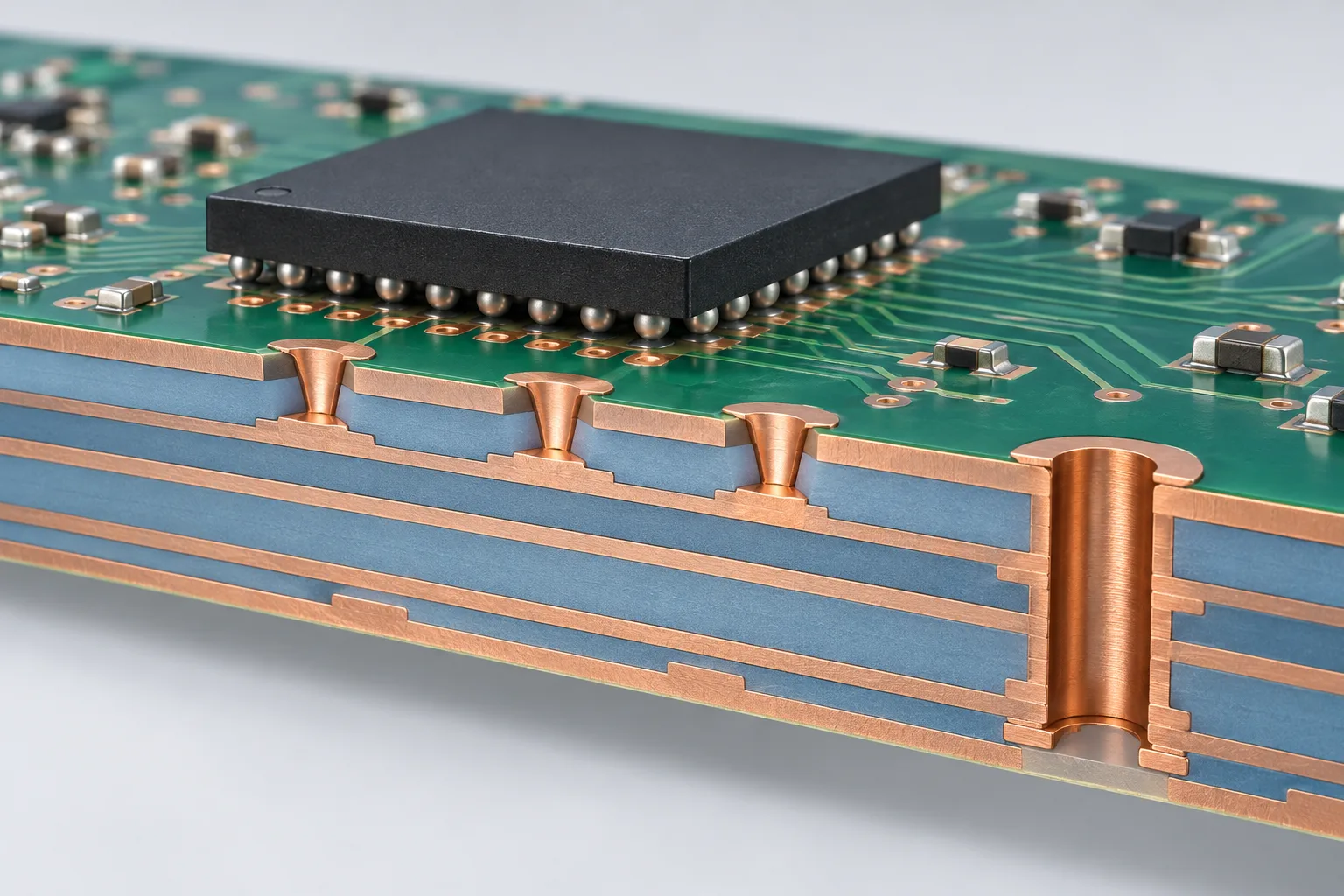
Use the via-in-pad filling and copper-capping guide to define the treatment for each via family. Identify the solderable component lands that need a particular construction and distinguish them from vias elsewhere on the board. Selective treatment is worth quoting only when the fabricator confirms that it is practical within the actual process.
For routing alternatives, the stacked versus staggered microvia comparison helps frame the tradeoffs. Neither arrangement is automatically the lowest-cost choice for every layout. Routing area, required layer transitions, filling, process sequence and the evidence needed for acceptance all matter.
Do not substitute solder-mask coverage for an approved copper-capped component pad merely to lower a quote. Likewise, do not remove a qualification requirement because it is listed as an extra charge. Ask what the requirement verifies and whether a different construction would need a new evaluation.
A useful DFM response explains the proposed change, identifies the affected via families and states what still needs customer approval. Procurement should receive that response with the revised price, rather than receive a cheaper number with no explanation.
Use Panel and Quantity Planning to Improve Unit Economics
The price per delivered board is affected by how the design fits the manufacturing process and how order-level work is spread across usable units. Ask for quantity breaks based on the same design revision, finish, inspection scope and delivery assumptions. A forecast is useful context, but it is not the same as a committed order.

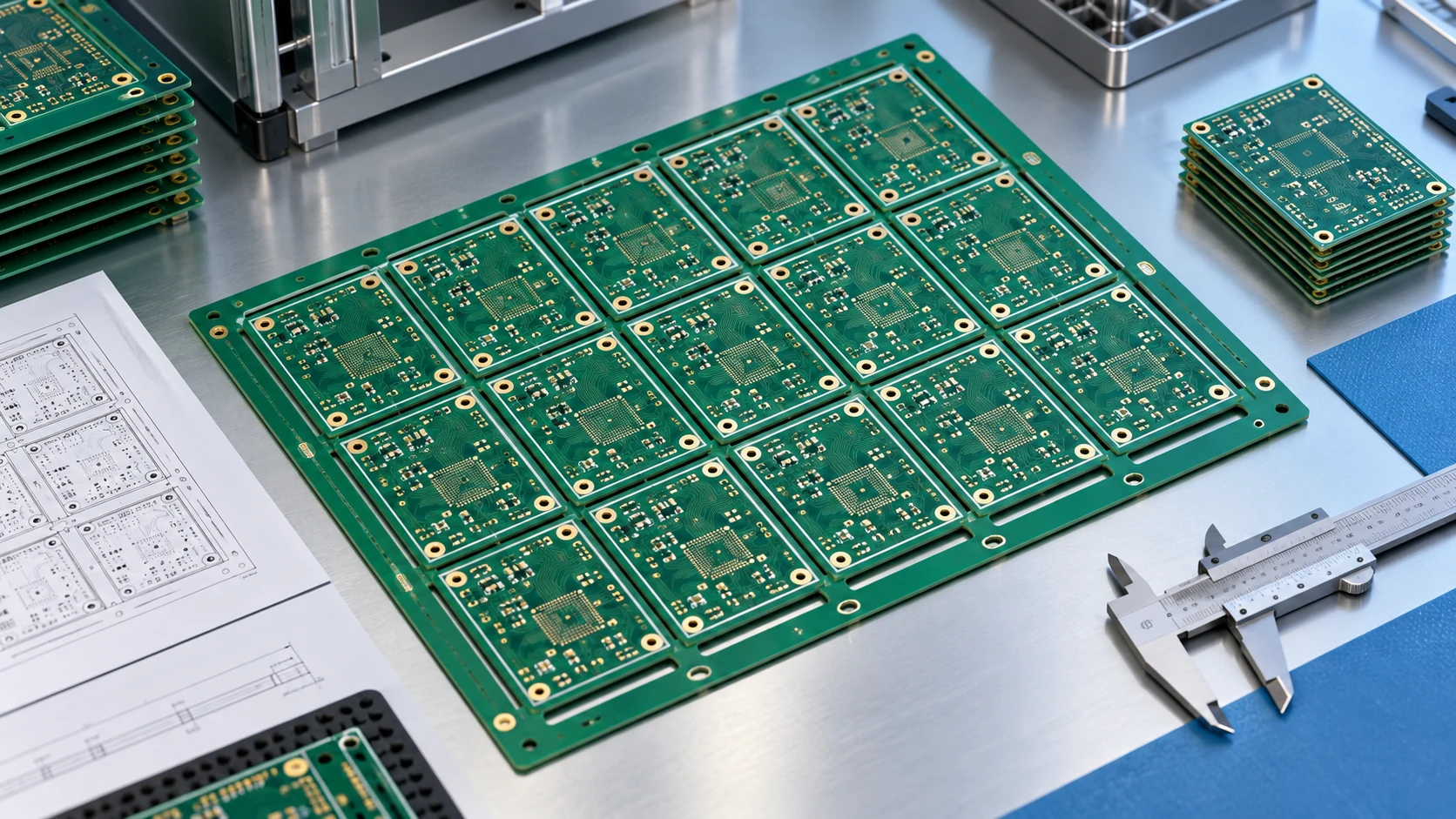
Ask the fabricator to propose a production-compatible panel arrangement. The panel needs space for processing, coupons and any relevant tooling requirements; the assembler may also need rails, fiducials and a depanelization method. The smallest geometric gap between boards is not necessarily the most economical or robust manufacturing arrangement.
Review whether a modest outline or array change could improve utilization without affecting the product. Treat that as an engineering change request, not permission to alter the released dimensions. Board edges, connector positions, clearance requirements and the enclosure interface still have to work.
Panel efficiency is a recognized cost factor: Eurocircuits’ panel-utilization explanation illustrates why the arrangement can affect price per board. It describes that company’s pooling model; do not assume the same pooling service or numerical thresholds apply to a XinshunPCB order.
Higher quantities can distribute setup costs across more boards, but buying unnecessary stock can erase the apparent saving. Include storage, revision changes, cash tied up and the risk of unused inventory in the decision. Ask whether repeat-order setup charges differ and which changes would trigger engineering review again.
How XinshunPCB Builds a Competitive HDI Proposal
XinshunPCB’s value proposition for a cost-sensitive HDI project is direct manufacturing discussion around your actual files. Rather than selecting a price from an unrelated sample board, you can ask for a construction review and a quotation tied to the required output. The proposed savings should be visible in the manufacturing scope.
The published HDI manufacturing capabilities describe build-up structures, microvia arrangements and via-in-pad options subject to review. Send the proposed stackup and via map with your RFQ so the discussion can identify a suitable route. Published capability limits are planning references, not approval of every feature combination.
Ask XinshunPCB to separate the quote into the approved baseline and any cost-reduction alternatives. For each alternative, request the affected requirement, the reason for the proposed change, the price difference and the approval needed before manufacture. This makes the price advantage traceable to a technical decision.
Direct communication can also reduce avoidable coordination work: one clear DFM response is easier to review than several conflicting interpretations of the drawing. However, it does not guarantee that every project will be cheaper than every competing supplier. Compare actual quotations with the same technical and commercial scope.
If assembly is also required, ask for it as a separate, defined scope. A bare-board saving should not create greater assembly difficulty or additional rework. Combining fabrication and assembly review can expose mismatched pad, panel and test assumptions before purchasing, while allowing you to evaluate the pricing for each part of the project.
Compare the Total Quotation, Not Only the Board Price
Normalize supplier quotations before declaring a winner. Confirm that the board revision, quantity, acceptance requirements and deliverables match. Separate recurring fabrication charges from engineering, tooling, qualification, packaging and delivery items. Identify any exclusions instead of treating an empty price field as free.
Comparison method: total quoted acquisition cost = recurring board charge + applicable one-time charges + agreed inspection and packaging charges + freight and applicable import charges. Avoid counting items twice when they are already included. Divide by the agreed accepted quantity only after the commercial scope is clear.
Keep that comparison separate from estimated lifecycle cost. Engineering time, inventory exposure, assembly yield and field risk may matter greatly, but they require their own evidence and assumptions. A bare-board quotation alone cannot quantify them accurately.
Confirm the delivery term and destination when comparing freight or import exposure. Also record quote validity, currency, payment assumptions, permitted delivery quantities and the treatment of rejected boards. The relevant question is what the agreed amount buys, not which document displays the smallest number.
Treat rush production as a separately priced option. Ask for both normal and expedited schedules when the project allows it, and confirm when the manufacturing clock starts. Unresolved DFM questions or missing customer approvals can affect a delivery plan even if production capacity has been reserved.
Send an RFQ That Makes Cost Reduction Reviewable
Start with the PCB quotation file checklist, then add the HDI-specific decisions. Your supplier needs enough detail to price the intended construction and distinguish fixed requirements from options that engineering is willing to review.
- Released manufacturing data, board outline, drill files and revision identifier.
- Numbered stackup with materials, thicknesses, copper and impedance requirements.
- Via-family map identifying spans, filling, capping and component-pad treatment.
- Surface finish, mechanical tolerances and relevant acceptance documents.
- Inspection, test, traceability and qualification deliverables.
- Prototype, pilot and production quantities, with required delivery locations.
- A clear list of negotiable features, each subject to written engineering approval.
Label the requested alternatives. For example, ask for the approved baseline and a supplier-proposed stackup option, rather than asking only for “your best price.” If an option is not technically acceptable, remove it from the price comparison instead of using it to negotiate against a different specification.
After choosing an option, update the release package and purchase documents together. Record approved deviations and keep the final drawing revision traceable to the quotation. Repeat orders should refer to that approved configuration so a one-time cost reduction does not become an accidental specification drift.
HDI PCB Examples for Your Cost Review
Use these manufacturing examples to discuss your own construction and quotation requirements.


HDI Applications with Project-Specific Cost Priorities

Consumer Electronics
Bring connected consumer products from prototype to production with XinshunPCB. We support custom PCB fabrication and SMT assembly for wearables, smart-home devices, wireless audio and portable electronics, with material, component and test requirements reviewed around your design.
Explore Solutions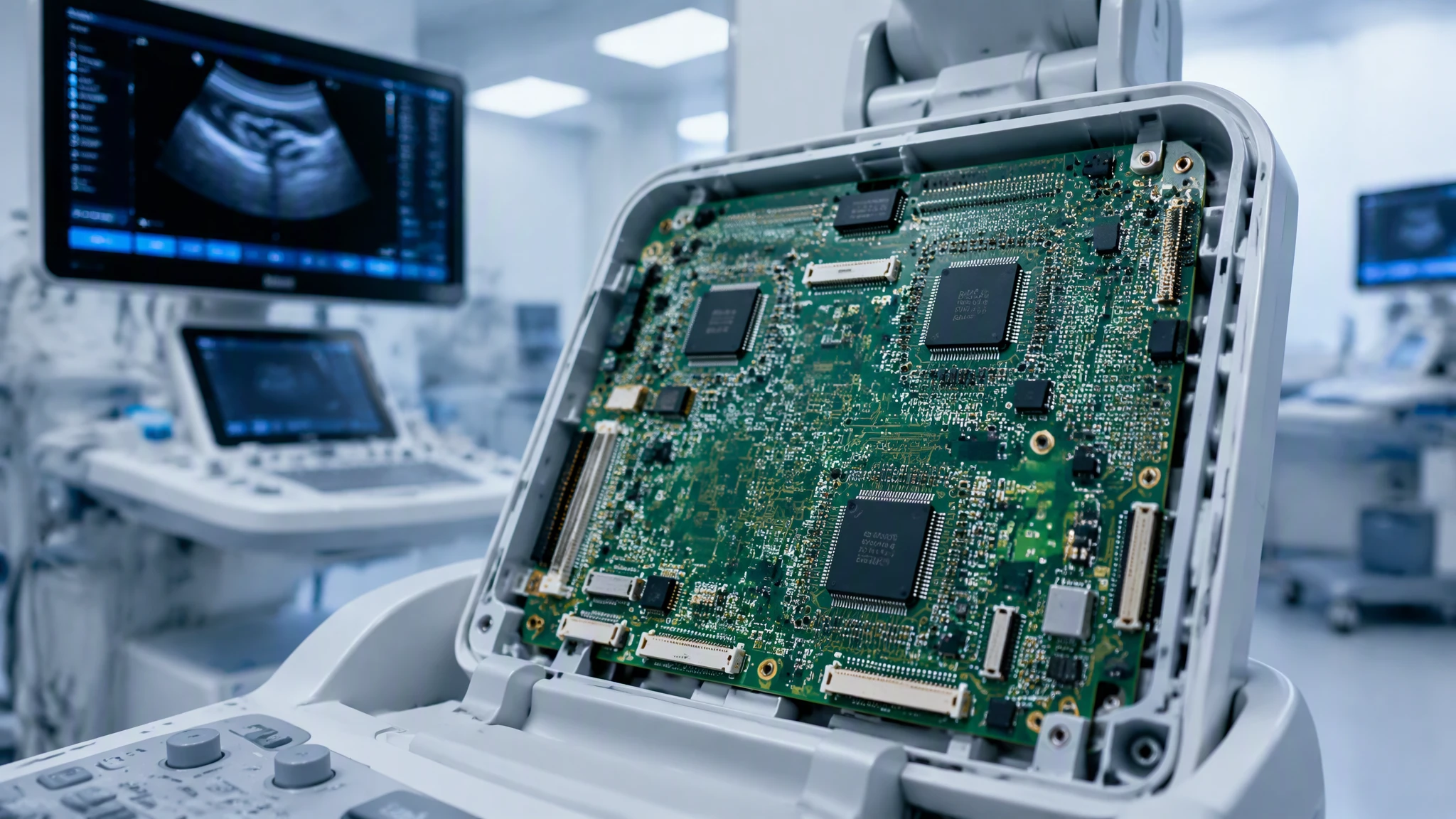
Medical Equipment
From patient monitoring and diagnostic instruments to medical imaging systems, XinshunPCB provides custom PCB fabrication and PCBA assembly for healthcare equipment. We help you align board materials, circuit layouts, and assembly requirements with your application, supporting development from initial prototypes to production.
Explore Solutions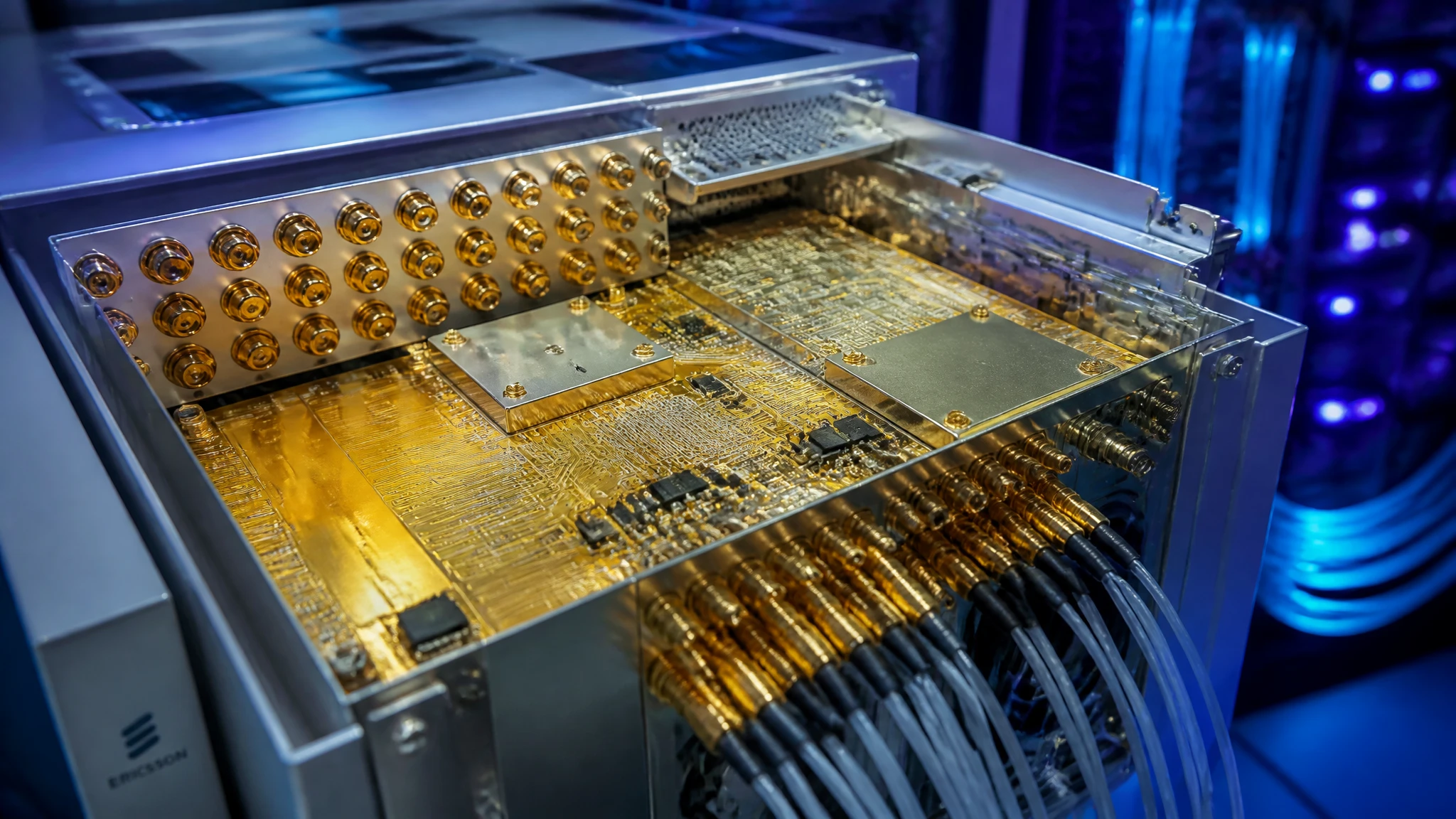
Telecommunications & IoT
From wireless gateways and connected sensors to networking equipment, XinshunPCB supports custom PCB fabrication and assembly for communication hardware. Align materials, stackups, compact layouts, and production testing with your application, from initial prototypes to repeat production.
Explore Solutions Consumer Electronics
Bring connected consumer products from prototype to production with XinshunPCB. We support custom PCB fabrication and SMT assembly for wearables, smart-home devices, wireless audio and portable electronics, with material, component and test requirements reviewed around your design.
Explore Solutions Medical Equipment
From patient monitoring and diagnostic instruments to medical imaging systems, XinshunPCB provides custom PCB fabrication and PCBA assembly for healthcare equipment. We help you align board materials, circuit layouts, and assembly requirements with your application, supporting development from initial prototypes to production.
Explore Solutions Telecommunications & IoT
From wireless gateways and connected sensors to networking equipment, XinshunPCB supports custom PCB fabrication and assembly for communication hardware. Align materials, stackups, compact layouts, and production testing with your application, from initial prototypes to repeat production.
Explore SolutionsHDI PCB Pricing and Cost-Reduction FAQs
Answers for procurement and engineering teams comparing custom HDI manufacturing quotations.
Request a Cost-Optimized HDI PCB Quote
A competitive HDI price starts with a build that meets the requirement and avoids unnecessary complexity. Compare approved options, protect critical quality requirements and make every quoted inclusion clear.
Send your HDI files to XinshunPCB for a cost and manufacturability review. Include your quantities, target delivery and the design features open to review. Ask for the baseline and proposed alternatives so engineering and procurement can select the right value together.