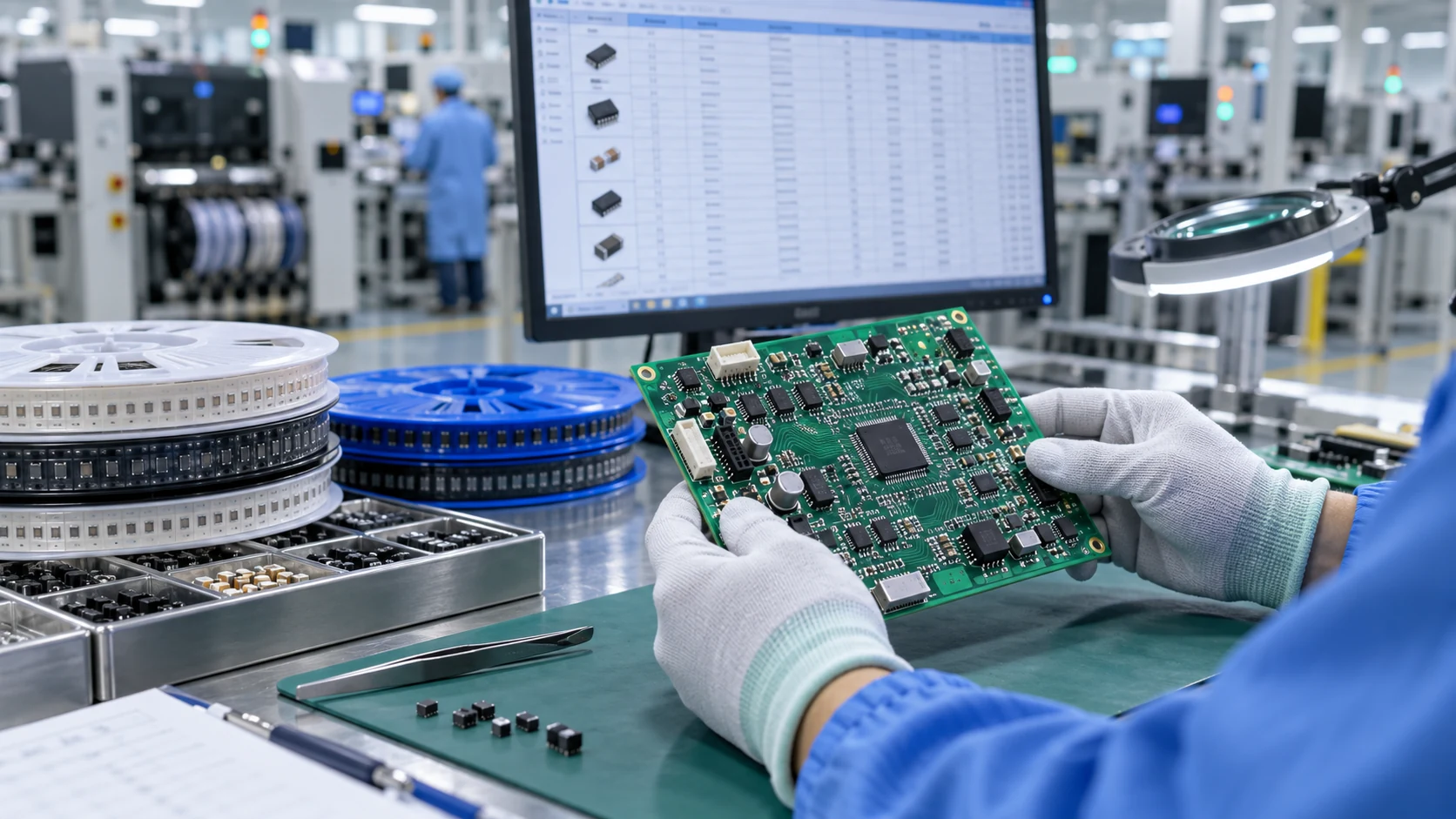

What Turnkey, Consigned and Hybrid PCBA Mean
Turnkey vs consigned PCB assembly is a decision about who sources and controls components, not a difference in the basic soldering method. With turnkey assembly, the manufacturer procures the agreed parts and assembles the board. With consigned assembly, the customer supplies all or most components and the assembler performs the agreed build. A hybrid arrangement divides the bill of materials (BOM) line by line.
For B2B teams, the best model depends on approved-vendor rules, component availability, working capital, traceability, and the ability to deliver a complete kit on time. This guide shows how to compare the models and specify the handoff before requesting a quote.
In a full-turnkey PCBA order, one supplier coordinates bare-board fabrication, component purchasing, assembly, and the inspection or testing named in the contract. The customer still owns the design, approves the BOM and alternatives, and defines acceptance criteria. “Turnkey” does not mean that the assembler can silently replace parts or choose test coverage.
In a consigned PCBA order, the customer sends the boards and components, or at least the components, to the assembler. The assembler receives, counts, identifies, stores, and uses that material according to the agreement. A customer-supplied kit can preserve a centrally negotiated supply contract, but incomplete or mislabeled material can stop production even when the assembly line is available.
A hybrid or partial-turnkey build is often the practical middle ground. The customer might consign a programmed module, allocated semiconductor, or approved connector while the assembler buys standard passives and the bare PCB. State ownership for every BOM line; a general instruction such as “use our critical parts” is too ambiguous for purchasing or receiving.
XinshunPCB's SMT assembly services support turnkey, consigned, and partial sourcing subject to review of the actual BOM, quantities, packaging, and test scope.
Turnkey vs Consigned PCB Assembly: Responsibility Matrix
The table describes common commercial arrangements, not automatic contract terms. Record exceptions in the purchase order and build agreement.
| Decision or task | Turnkey | Consigned | Hybrid |
|---|---|---|---|
| Component purchasing | Assembler buys approved parts | Customer supplies the agreed kit | Assigned by BOM line |
| Approved MPNs and substitutions | Customer approves; assembler checks supply | Customer approves and supplies | Customer approves every substitution |
| Material availability risk | Managed through supplier sourcing plan | Customer kit readiness is critical | Shared by assigned ownership |
| Incoming count and identification | Assembler verifies purchased stock | Assembler reconciles customer kit | Both streams reconciled |
| Scrap, attrition and unused stock | Define in quotation and terms | Define before shipping kit | Define per ownership group |
| Assembly and agreed testing | Assembler | Assembler | Assembler |
The most important distinction is accountability for material decisions. Even under turnkey, an approved manufacturer part number (MPN) list and a clear substitution process protect the design. Under consignment, both parties need a receiving record and a method to resolve shortages, damaged packaging, and unknown date or lot codes before material enters the line.

Compare Total Cost, Not Only the Assembly Price
A consigned assembly quote can appear lower because the customer purchased the components separately. That does not establish a lower total landed cost. Add the component invoice, inbound freight, customs or handling where applicable, kitting labor, shortage replacement, storage, and the cost of excess or obsolete stock. Then compare both models at the same build quantity and test scope.
A turnkey quotation usually combines material procurement with assembly work, but buyers should still ask for a clear breakdown of major material assumptions, board fabrication, tooling or NRE, programming, inspection, test fixtures, and freight. A component price shown in an early quote can change if the approved MPN is unavailable at order release. Agree how price and lead-time changes are approved.
For a hybrid build, list the customer-supplied lines separately from supplier-procured lines. This makes a shortage visible instead of hiding it in a single “material included” line. Standardize the comparison on the same BOM revision, acceptable alternates, order quantity, and delivery terms.
Our PCB manufacturing cost guide covers the bare-board quote drivers. Component sourcing and PCBA services add a different cost layer, so do not use a bare-board unit price as a complete assembly comparison.
Lead Time Starts with a Complete, Released Material Set
Assembly capacity is only one part of the schedule. For turnkey, the purchasing plan depends on verified stock, supplier lead times, approved alternatives, and the released BOM. For consigned builds, the assembler cannot reliably start when a kit contains a missing reel, wrong revision, unsuitable packaging, or too few parts to cover process attrition.
Agree on a kit-complete date rather than assuming that the purchase order date is the production start. Include bare-board arrival, material receipt and reconciliation, engineering questions, first-article approval if required, assembly, testing, and shipment. Track long-lead parts separately. A customer-held allocation can favor consignment, while an assembler's established purchasing channels can favor turnkey; neither outcome is universal.
Control changes carefully. If engineering changes a footprint or approved MPN after material has been purchased, identify affected stock and panels before releasing a new build. A revision-controlled BOM, placement file, assembly drawing, and fabrication package should tell the same story. The PCB quotation file checklist explains how to assemble a consistent RFQ package.
Quality, Traceability and Test Scope Still Need Agreement
The sourcing model does not by itself define assembly quality. Specify the applicable workmanship standard and class, component authenticity controls appropriate to the program, lot or date-code records, moisture-sensitive handling when relevant, and what evidence the supplier must deliver. IPC identifies J-STD-001 and IPC-A-610 as distinct assembly-process and acceptance documents; name the edition and applicable class in the order rather than assuming a label covers every requirement.
Likewise, solder-paste inspection, automated optical inspection, X-ray, in-circuit testing, and functional testing answer different questions. AOI cannot see every hidden joint, and an electrically continuous board has not necessarily passed its intended operating test. The SMT assembly capability page outlines these methods and notes that the actual coverage is agreed during project review.
For consigned parts, define what happens if incoming material fails identification or condition checks. For turnkey parts, ask how approved suppliers, substitutions, and traceability are recorded. In either case, agree who authorizes rework, how nonconforming assemblies are reported, and which records accompany the shipment.
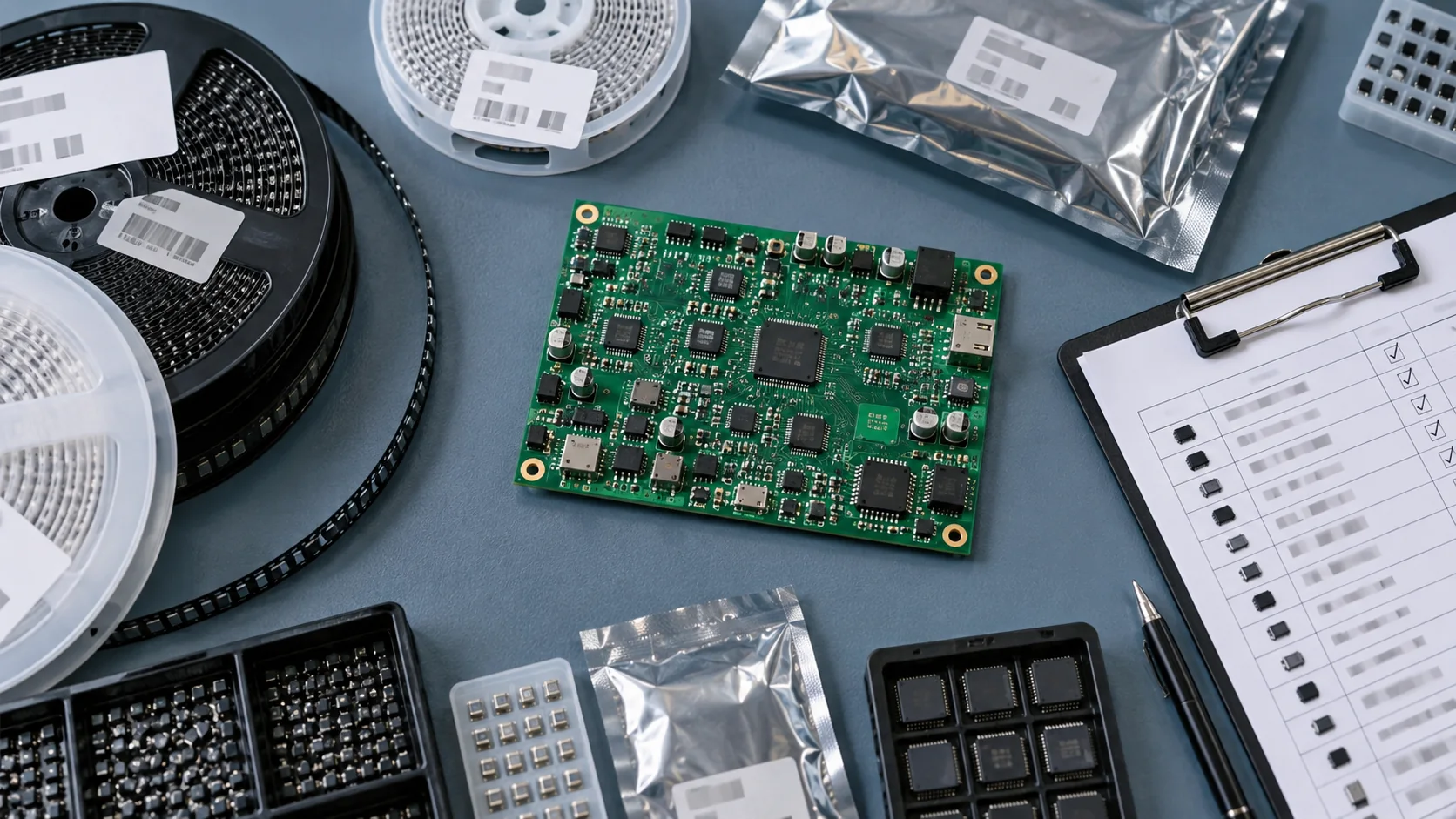
When a Hybrid Model Makes More Sense
Hybrid sourcing works well when the customer must control a few strategic parts but wants the assembler to purchase routine items. Typical customer-supplied lines include allocated ICs, secure or preprogrammed modules, custom connectors, and components under an existing approved-vendor contract. The assembler can procure commodity passives or other approved materials after checking the BOM.
The risk is that “partial turnkey” becomes an undefined split. Add a BOM column for sourcing owner, another for approved MPN and alternatives, and a receipt deadline for each consigned line. Decide whether the assembler may buy emergency replacements and how that approval will be documented. Record ownership of unused parts, excess stock, and scrap.
Keep one released configuration for the whole build. Two purchasing streams should not create two competing BOM revisions. When a late substitution affects electrical performance, footprint, firmware, or a regulated requirement, route it through engineering approval before placement. This is especially important when moving from prototypes to repeat production.
A Practical Decision Checklist for B2B Buyers
Choose a model by answering these questions with procurement, engineering, and the assembly supplier:
- Who has dependable access to each approved component? Identify allocated, long-lead, and custom parts instead of judging the whole BOM as one block.
- Who owns supplier qualification and substitution approval? Document the authorized MPN list and change process.
- Can the customer deliver a production-ready kit? Confirm quantity, reels or trays, labeling, ESD protection, and moisture-control requirements.
- What is the true cost basis? Compare total materials, build services, freight, stock exposure, and one-time charges at the same quantity.
- Which records and tests must be supplied? Specify workmanship class, inspection, firmware, functional test, and traceability where needed.
- How will repeat orders be replenished? Establish reordering triggers, inventory ownership, and revision control.
Turnkey is often simpler when the buyer wants one procurement and build interface. Consignment can be appropriate when the customer already owns or must control material. Hybrid sourcing can preserve control of critical parts while reducing the customer's kitting burden. The right choice comes from a line-by-line review, not a generic price slogan.
What to Send for a Comparable PCBA Quote
Send a released BOM with manufacturer part numbers, reference designators, quantities per board, approved alternates, and a sourcing-owner column. Include Gerber or ODB++ fabrication data, drill files, board outline, placement coordinates, assembly drawings, and the build quantity. State whether the assembler supplies the bare boards. Add programming files, fixture requirements, test procedures, acceptance limits, and delivery location when relevant.
For consigned material, provide a kit manifest with packaging type, available quantity, expected attrition allowance, lot or date code requirements, and expected arrival date. For turnkey, indicate any approved distributors, restricted sources, and substitution rules. For hybrid, separate both lists so an unresolved line cannot disappear between purchasing teams.
XinshunPCB can review the material split and manufacturing files against its turnkey PCB assembly services and SMT process capabilities. If your scope includes enclosures, cables, or final integration, state that explicitly. Send the controlled package through the PCBA quotation contact page and ask for written assumptions, exceptions, and a schedule based on material readiness.